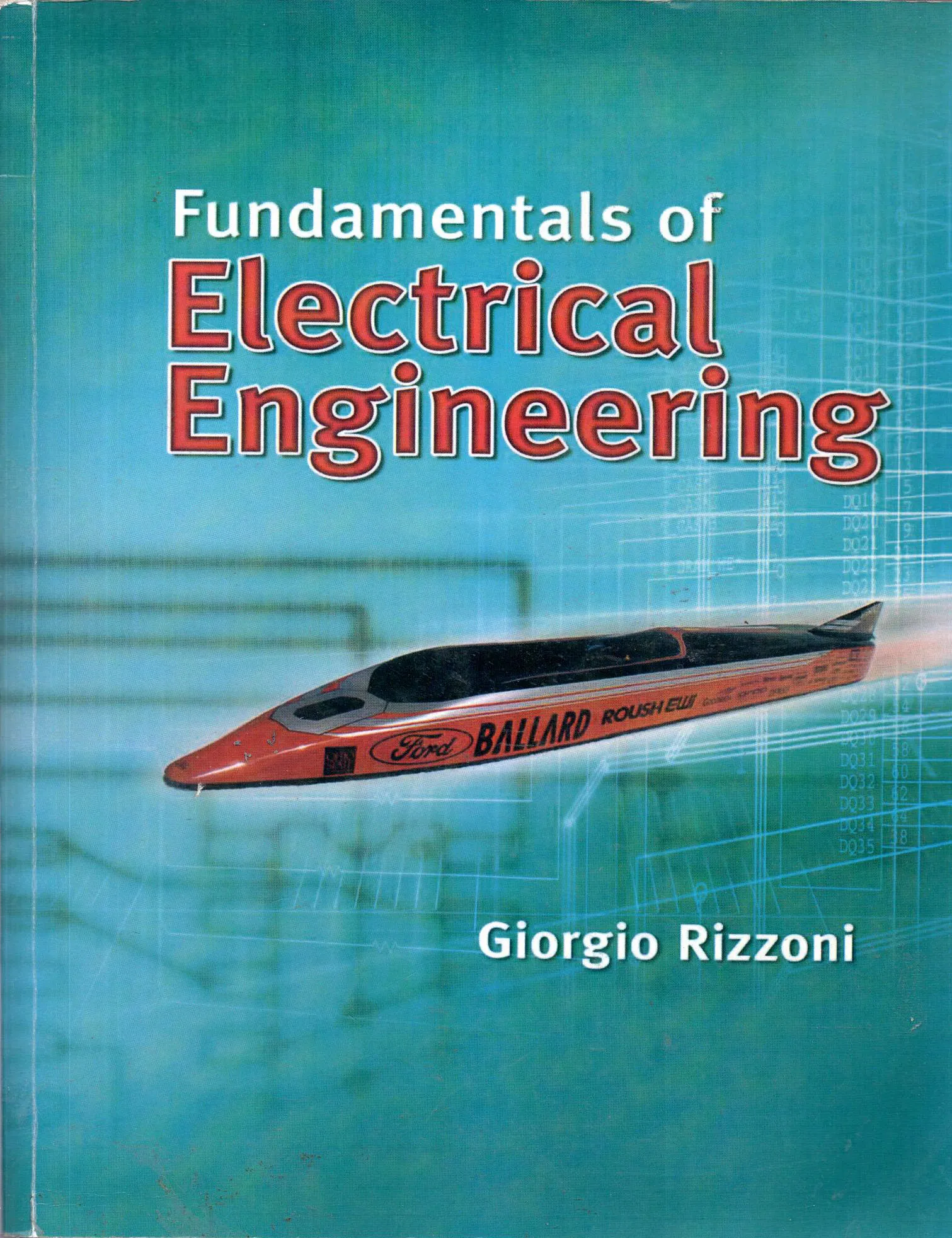
کتاب «مبانی مهندسی برق» نوشته جورجو ریتزونی یکی از منابع معتبر و شناختهشده برای درس مقدماتی مهندسی برق در دانشگاهها است. این کتاب با هدف آموزش اصول پایه مهندسی برق به دانشجویان رشتههای مختلف مهندسی تألیف شده و مفاهیم اساسی را با زبانی روان، همراه با مثالهای کاربردی و مسائل متنوع ارائه میکند. از ویژگیهای برجسته این اثر، تأکید بر کاربردهای عملی مفاهیم مهندسی برق در سایر شاخههای مهندسی و صنایع نوین است.
مطالب کتاب از مبانی مدارهای الکتریکی آغاز شده و سپس به تحلیل شبکههای مقاومتی، مدارهای جریان متناوب، پاسخ گذرا، توان الکتریکی، تقویتکنندههای عملیاتی، نیمههادیها، دیودها، ترانزیستورهای BJT و FET، مدارهای منطقی دیجیتال، اصول الکترومکانیک و ماشینهای الکتریکی میپردازد. همچنین در پایان کتاب، مباحثی مانند جبر خطی، اعداد مختلط، تبدیل لاپلاس و نمونه سؤالات آزمون Fundamentals of Engineering (FE) نیز گنجانده شده است.این کتاب به دلیل ساختار آموزشی منظم، استفاده از تصاویر و نمودارهای آموزشی، مثالهای حلشده و تمرینهای متنوع، برای دانشجویان مهندسی برق، مهندسی مکانیک، مهندسی کامپیوتر، مهندسی عمران و سایر رشتههای فنی بسیار مناسب است. همچنین مهندسان و علاقهمندان به یادگیری اصول مهندسی برق میتوانند از آن به عنوان یک مرجع آموزشی جامع و کاربردی استفاده کنند.
Fundamentals of Electrical Engineering by Giorgio Rizzoni is a comprehensive introductory textbook designed to provide students from a wide range of engineering disciplines with a solid foundation in electrical engineering principles. The book presents essential concepts through clear explanations, practical applications, numerous worked examples, and real-world engineering case studies, making complex topics accessible to beginning engineering students.
The text covers electric circuits, resistive network analysis, AC circuit analysis, transient response, frequency response, electric power, operational amplifiers, semiconductor devices, diodes, bipolar and field-effect transistors, digital logic circuits, electromechanics, and electric machines. Additional appendices introduce linear algebra, complex numbers, the Laplace transform, and preparation material for the Fundamentals of Engineering (FE) examination.
Widely adopted as an undergraduate engineering textbook, this book is valued for its practical orientation, well-structured pedagogy, extensive problem sets, and emphasis on connecting electrical engineering concepts to applications across multiple engineering disciplines. It serves as an excellent resource for students, instructors, and practicing engineers seeking a strong foundation in electrical engineering.